
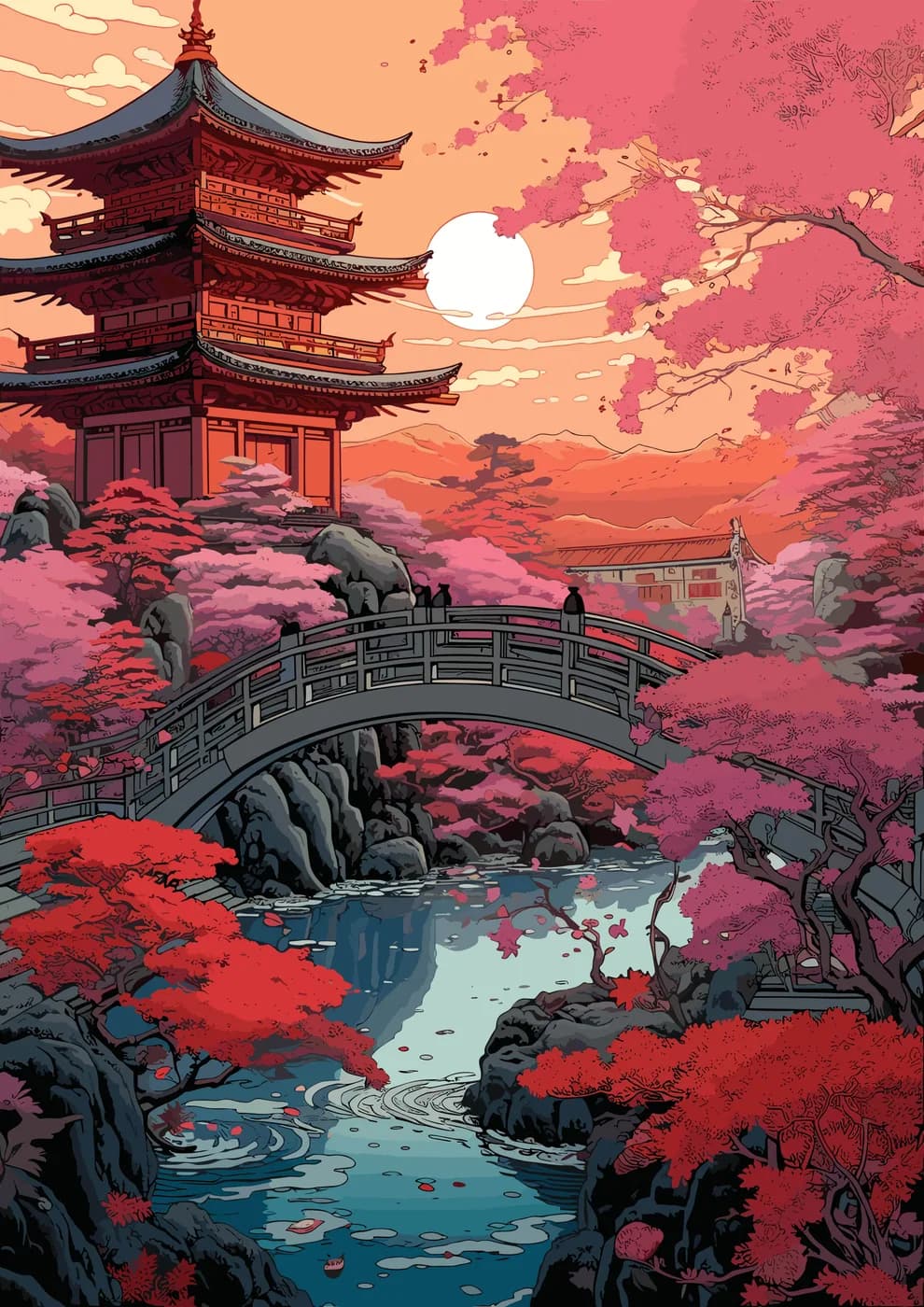
Autumn appears across OniArt more often than any other season. It is there in distant temples, forest paths, mountain retreats and the leaves moving around solitary figures.
That repetition is not a rule or a fixed collection requirement. Autumn simply offers many of the qualities the work keeps returning to: atmosphere, transition, warmth, distance and the feeling that a quiet scene is already changing.
A landscape in full summer can feel settled. An autumn landscape rarely does. Even when every figure remains still, colour and falling leaves suggest that time is moving through the image.
A season already in motion
Falling leaves make empty space active. They can cross a dark doorway, interrupt a pale sky or travel between foreground and distance. The scene gains movement without needing spectacle.
Autumn also implies a before and an after. A path scattered with leaves suggests recent weather or a passing traveller. A nearly bare branch places the image somewhere between abundance and disappearance. That uncertainty gives a still image a quiet narrative pressure.
For OniArt, this is useful because many landscapes are built around moments rather than events. The viewer arrives after something may have happened and leaves before the world fully explains itself.
Colour without tranquillity
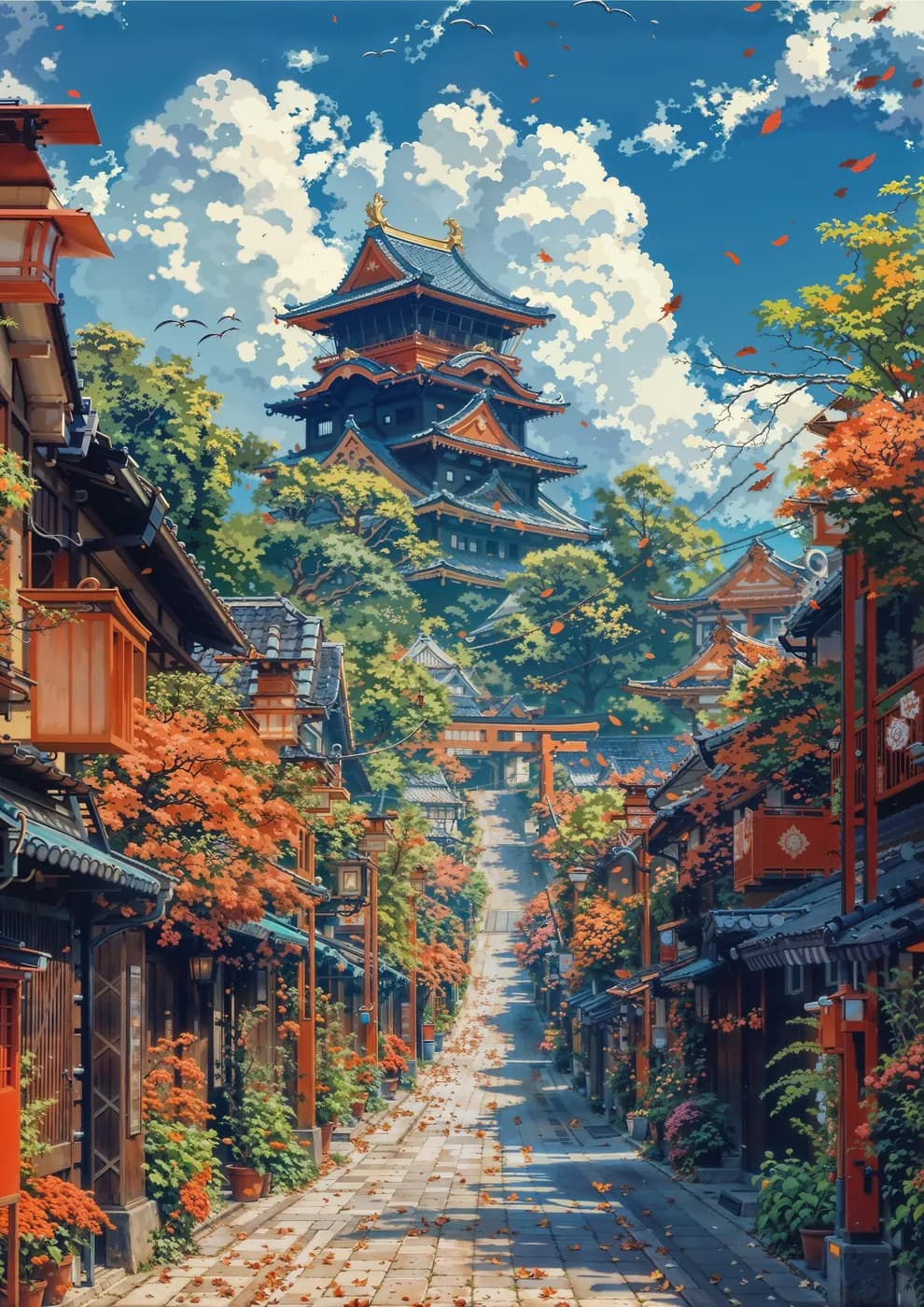
The autumn palette can be warm without being comfortable. Crimson, rust and muted gold sit against dark timber, wet stone, deep green and grey sky. The contrast gives the image energy, while the darker structure prevents it from becoming decorative.
Red is especially important within OniArt, but it works best when it has something restrained to push against. A small area of foliage can become the visual centre of an otherwise quiet landscape. A red garment can connect a character to the season around them.
The aim is not perfect harmony. Slight tension between warmth and melancholy gives these scenes their emotional weight.
Using leaves to move the eye
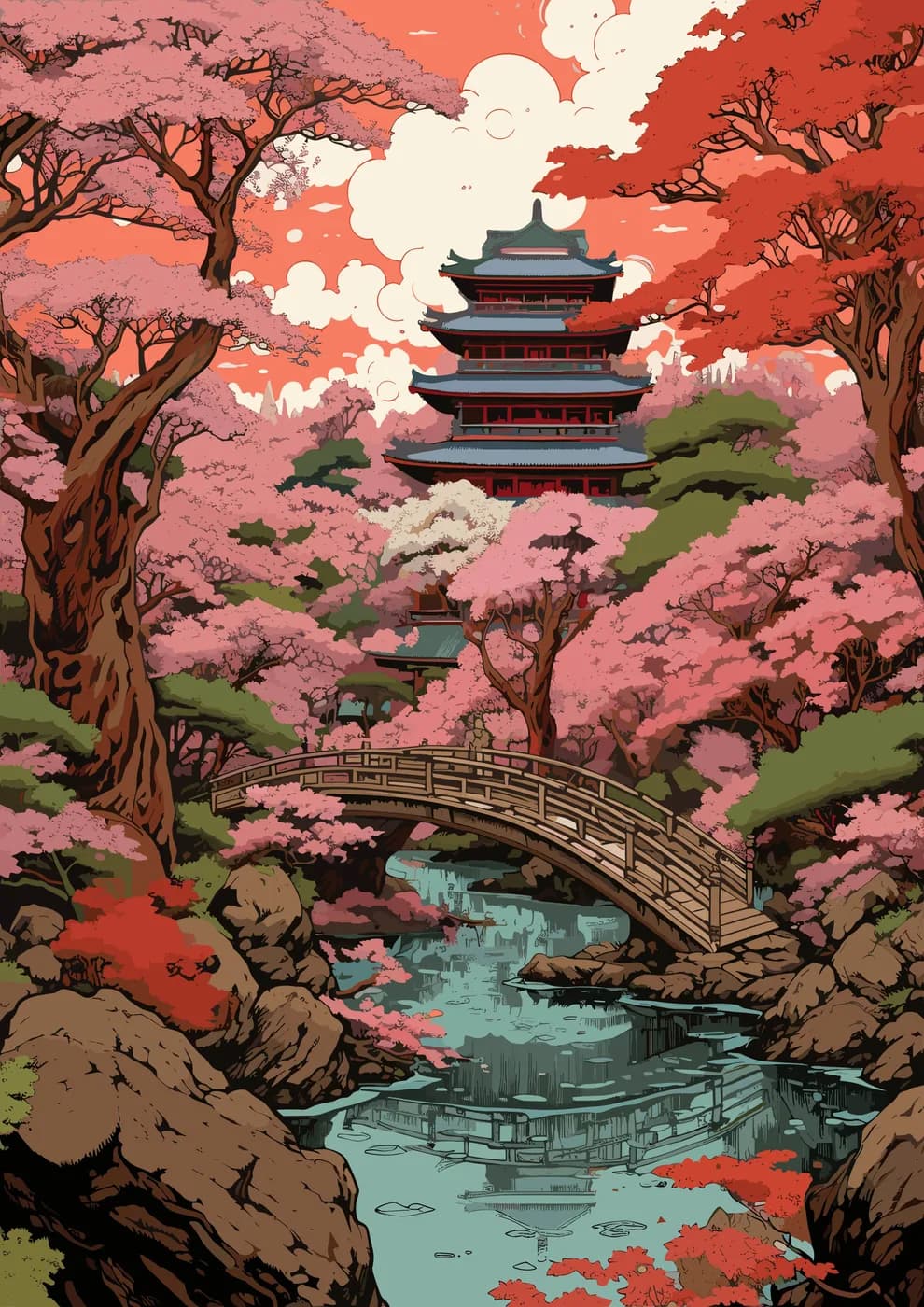
Leaves are not only seasonal detail. Their placement can lead the eye toward a character, pathway, shrine, doorway or distant area of light. A cluster creates emphasis; a loose trail creates direction.
They can also connect parts of a composition that would otherwise feel separate. A foreground branch, a figure in the middle distance and a mountain beyond can belong to one movement when the leaves travel across those layers.
This is most effective when the pattern remains irregular. Too much control makes the leaves feel like decoration. Too little turns them into noise. The image needs enough movement to feel alive while preserving somewhere for the eye to rest.
Returning to the same season
Autumn is not the only visual language in OniArt, and it does not need to appear in every world. It keeps returning because it carries atmosphere and story without requiring an image to explain either one directly.
It offers colour alongside restraint, beauty alongside impermanence, and solitude without emptiness. Those contradictions are close to the centre of the project — worlds that feel briefly inhabited, slightly distant and worth returning to before the season changes again.