
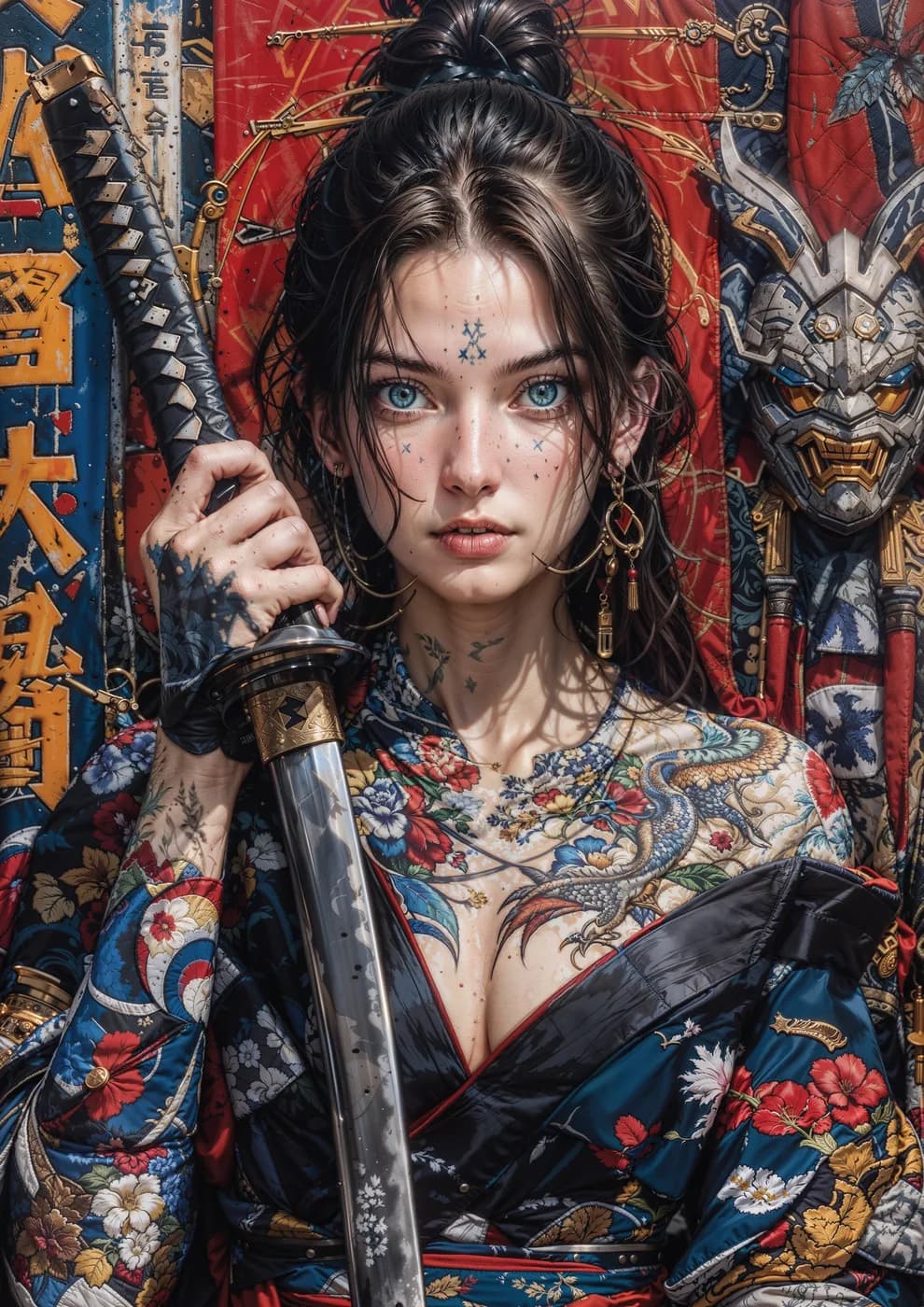
A warrior can be made visually impressive with armour, a weapon and a dramatic pose. Creating a character with presence asks for something more specific: a clear silhouette, a controlled palette and details that suggest a life beyond the frame.
OniArt warrior pieces often sit between portrait and story. The figure must hold attention immediately, but the image should still leave questions open. Discipline matters more than adding every possible symbol.
The planning studies around Japan Female Samurai Woman show how those decisions can be separated, tested and brought back together.
The silhouette comes first
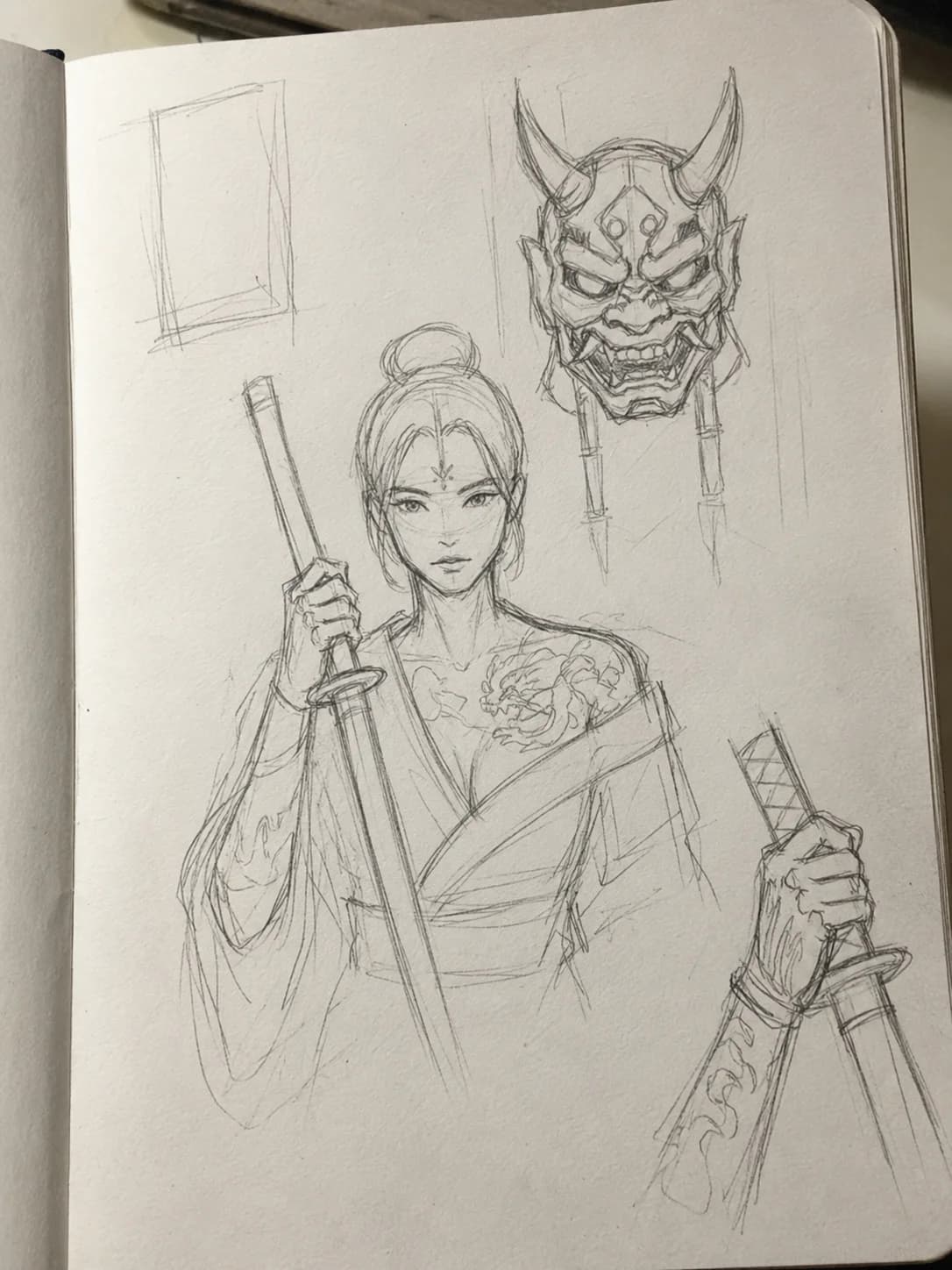
Before colour or surface detail, the figure needs a readable shape. The angle of the shoulders, the position of the hands and the line of the sword establish whether the character feels guarded, aggressive, composed or uncertain.
A strong silhouette does not require an exaggerated action pose. Restraint can create more tension. A warrior who appears controlled suggests that the action is being withheld rather than absent.
The character sketch focuses on pose and expression while separating out the mask, hand and sword details. Studying those elements away from the finished image makes their role easier to judge.
Colour sets the temperature
Colour decides how the viewer reads that silhouette. Crimson can suggest danger, ceremony or resolve. Black adds weight and separation. Pale skin and controlled highlights bring the face forward without requiring the entire costume to become bright.
A limited palette also helps complex clothing remain legible. When every panel, cord and ornament competes for attention, the character loses hierarchy. Repeating a small number of colours lets detail accumulate without becoming visual noise.
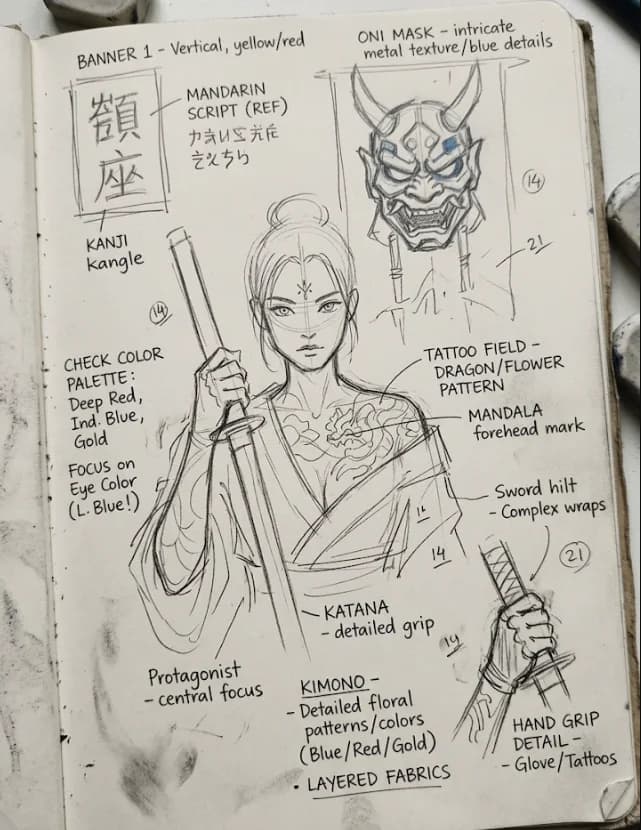
The annotated planning sheet treats palette as part of the character rather than a finishing effect. Costume, tattoo, mask and weapon are considered together so they belong to the same visual direction.
Details need a reason
Warrior imagery invites ornament: armour plates, masks, tattoos, patterns, cords and weapons. The challenge is not finding more to add. It is deciding which details strengthen the character and which only demonstrate complexity.
A mask can imply another identity without covering the face. A tattoo can break a large area of skin and introduce history without explaining it. The sword grip can carry texture where the hands need emphasis. Each detail earns its place by supporting hierarchy, mood or story.
This is why planning sheets are useful even when the final image will be developed digitally. They make the choices visible. A note beside a costume edge or colour sample records direction before polish makes every decision look inevitable.
The strongest detail is not always the most elaborate one. It is the detail that changes how the character is read.
Selection creates character
Generative exploration can produce many convincing warriors. The difficult part is recognising which version belongs inside OniArt. Technical detail alone is not enough; the pose, expression, palette and atmosphere must point toward the same character.
Selection continues during refinement. Areas that distract from the face or hands can be reduced. Colour relationships can be tightened. Anatomy, costume edges and weapon details can be corrected according to what the image needs at higher resolution.
The final piece should feel resolved without feeling over-explained. Viewers can understand the warrior’s discipline and presence while still imagining the conflict, allegiance or world beyond the portrait.
A figure inside a larger world
OniArt warriors are not isolated from the landscapes and spirits elsewhere in the catalogue. Repeated colours, weather, architecture and atmosphere allow a portrait to feel as though it belongs to the same wider world.
Shape gives the warrior presence. Colour gives the image temperature. Selected details give the character specificity. What remains unsaid gives the viewer room to imagine everything outside the frame.